Drop-down: cleaner floor, harder overhead install
A ceiling or wall-mounted cassette leaves the floor and furniture zone free. It is a neat architectural solution when the screen can descend in front of artwork, shelving or a television. Installation is usually the bigger commitment because a long cassette has to be mounted level and supported securely.
Floor-rising: simpler overhead story, bigger furniture footprint
The screen rises from below, so you avoid hanging a heavy cassette above the viewing area. The trade-off is that the housing must live on or behind furniture, and the UST projector, center speaker and screen base can compete for the same physical space.
Flatness and alignment
For UST use, both formats benefit from tensioning. A screen that is slightly wavy may look acceptable with a long-throw projector but can show obvious geometry errors when a UST beam hits it from a steep angle.
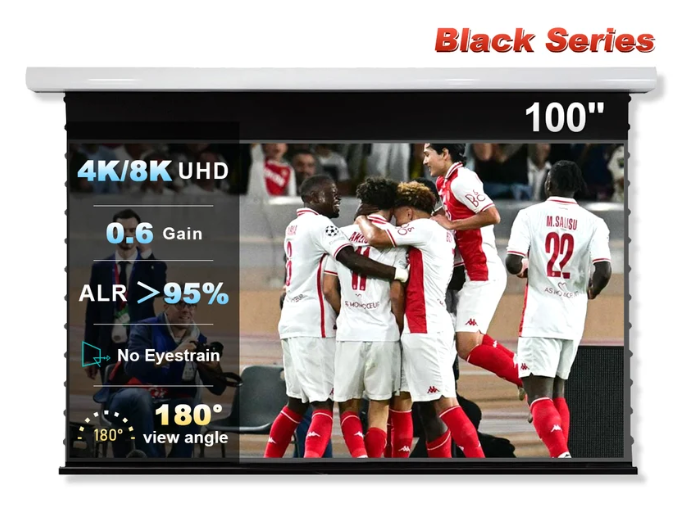
Which room type points to each format?
Drop-down is often logical when you have a solid mounting point overhead and want the floor area visually clean. Floor-rising is attractive for rentals, rooms where ceiling work is undesirable, or installations where furniture can conceal the housing.
Frequently asked questions
Which is easier to install?
It depends on the room. Floor-rising avoids overhead mounting, while drop-down avoids dedicating furniture or floor space to the cassette.
Can both use ALR material?
Yes, but the material must be designed for the projector geometry and orientation.
Which hides better?
Both can disappear visually; one hides above the image, the other below it.
Research note
Product-specific facts on this page were checked against the NothingProjector product listing and related manufacturer listings on September 16, 2026. Where we discuss fit, trade-offs or room design, that is editorial analysis rather than a claim of hands-on testing. Live merchant details can change.